


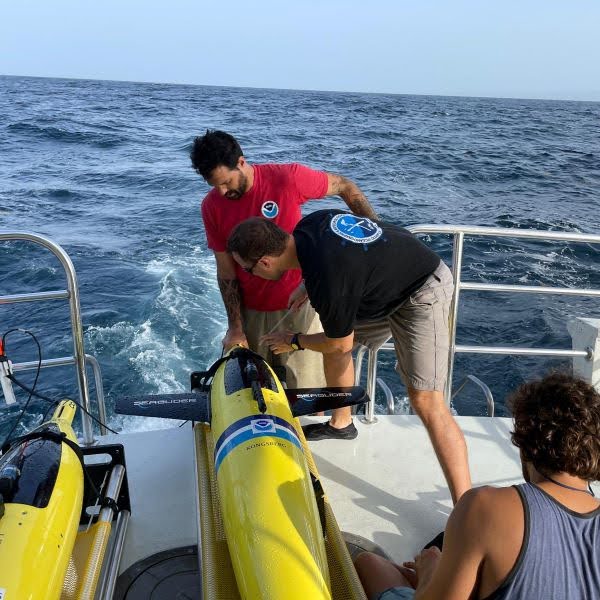
It’s June, and that means we’ve entered hurricane season for both the Atlantic and Eastern Pacific. IOOS’ hurricane glider coordination project is planning to deploy 29 NOAA, Navy, and partner gliders for the 2025 hurricane season. In addition, we’re leveraging data from an additional 50 gliders deployed on separate missions in hurricane-prone regions of interest. That makes for nearly 80 gliders out there this season, gathering data used to improve hurricane forecast models. Visit our hurricane resource page to access those glider data, along with a host of other IOOS resources. And, as always, keep up with NOAA’s National Hurricane Center for forecasts, warnings, and up to the minute hurricane information.
Next, we’re delighted to help get the word out on the latest Dialogues with Industry reports, this time focused on Harmful Algal Blooms. The Dialogues are a joint venture led by Marine Technology Society in partnership with the Global Ocean Observing System, National Oceanic and Atmospheric Administration, and industry partners. They bring together public, private, and academic spheres to dig into key topics together. This second Dialogue series focused on partnerships, technology gaps, and capacity to support the growing need for ocean data and information relative to HABs. The five resulting reports and Dialogue recordings are available now.
Finally, we’re proud to announce that we’ve taken on nine open source data contributor projects for the Google Summer of Code 2025. We’ve just wrapped the “community bonding” period where the contributors get to know their mentors and get up to speed. The coding period began this week, and we’ll be seeing final work products at the end of August. This is our fourth summer as a mentor organization in the GSoC, and it’s been an incredibly rewarding experience. Congratulations to applicants whose proposals were accepted, and thank you to everyone that submitted an application to one of our project ideas. We wish you all the best going forward and encourage you to continue to contribute to open source communities such as IOOS and GSoC — participation by new contributors is essential to sustaining open source software!