

Marine Life
Background
Building on Success
- Marine Biodiversity Observation Network (MBON)
- Animal Telemetry Network (ATN)
- IOOS Partners and Regional Associations
Leveraging Collaboration
Interagency Collaboration
Focus Areas
The Marine Life Program encompasses several key focus areas, each addressing critical aspects of marine biodiversity observation and conservation.
Animal Telemetry Network
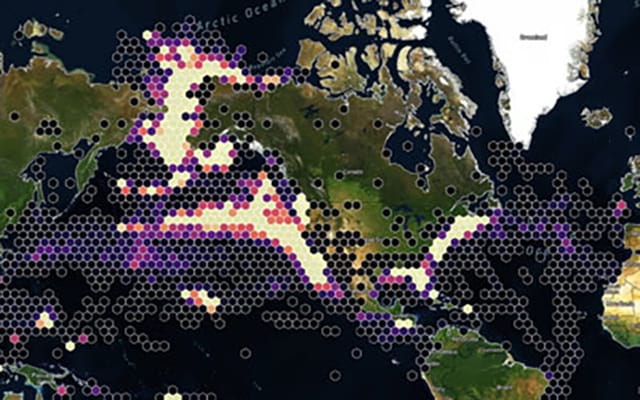
Gathering information on the behavior and movement of marine animals is an essential part of the responsibilities of our national agencies charged with protecting endangered and threatened marine species as well as providing ecosystem-based management of commercially harvested marine resources.
The multi-agency U.S. Animal Telemetry Network (ATN) has been established to provide unity, stability and continuity to the national infrastructure that facilitates the collection, management and availability of this marine animal telemetry data.
Marine Biodiversity Observation Network
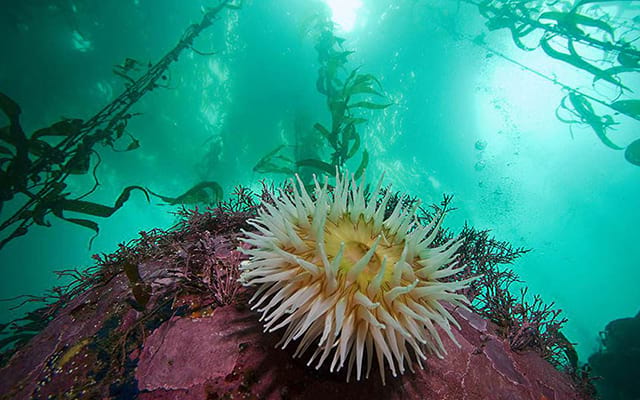
The US Marine Biodiversity Observation Network (US MBON) is an interagency initiative that seeks to coordinate across sectors and government to characterize biodiversity and understand drivers of change.
US MBON represents a broad, collaborative effort to address the need for systematic collection and sharing of marine life information, ensure that information is available for decision-making and management from local to national levels, and document marine biodiversity status and trends in the face of human- and climate-induced change using a range of technologies and approaches.
Through the National Oceanographic Partnership Program, NOAA, NASA, Office of Naval Research, and BOEM have invested in US MBON since 2014, most recently announcing new five year projects in 2022.
Harmful Algal Blooms
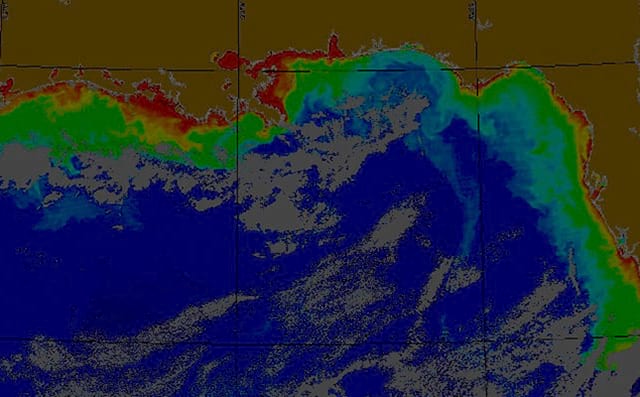
Harmful algal blooms (HABs) occur in marine and freshwater environments across the nation. Blooms can be noxious, discoloring water, and disrupting ecosystems by shading seagrasses or corals and causing oxygen depletion in bottom waters.
The most severe impacts are caused by HABs that produce toxins, resulting in illness and even death. HABs are estimated to result in annual economic losses totaling at least 100 million dollars. In recent years, the frequency and duration of HABs, along with the number of species responsible, have all increased. In addition, the geographic range of some HAB species is expanding.
Observations and measurements of HAB species and toxins are critical to support early warning and forecasting. IOOS has Pilot Projects to observe HABs and IOOS’ Ocean Technology Transition projects are supporting efforts to address two water quality issues: Harmful Algal Blooms (HABs) and Hypoxia.
Sanctuary Watch
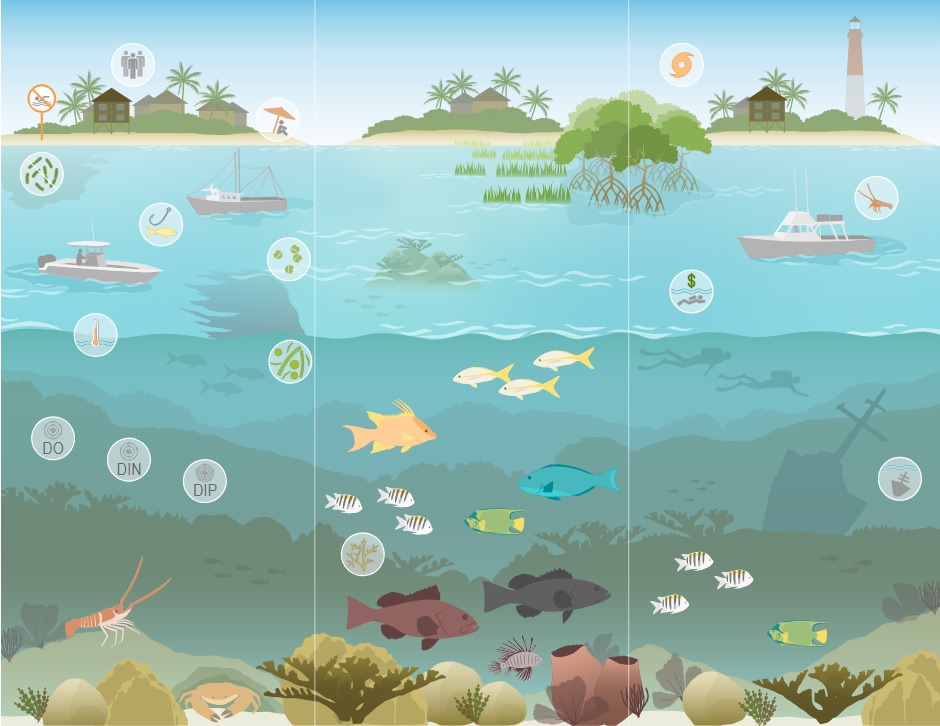
Easy access to information for tracking ecosystem conditions, human connections and management impacts is critical to timely, effective and community-based resource management.
The Sanctuary Watch platform provides web-enabled, interactive tools to track and better understand the changing nature of sanctuary ecosystems. Sanctuary Watch data products and information are developed in collaboration with our data partners along with science communicators and educators.
Applications and Use Cases
HAB Bulletin
Habitat Compression Indices
Sharks as Oceanographers
Data and Product Guidelines
Access the Documentation Portal
Key Resources
- Darwin Core Standards Implementation
- Metadata Requirements Documentation
- Quality Assurance Protocols
- Data Submission Workflows